Sunday, January 15, 2012

Rejection: Why it Doesn’t Mean What You Think it Means


FIRST: AN ANNOUNCEMENT: 

The book I’ve been writing with Catherine Ryan Hyde, HOW TO BE A WRITER IN THE E-AGE—and keep your E-sanity! will be published by Mark Williams international  in June of 2012. The book will be available as an ebook that will include free six-month updates. AND it will also be available in paper in both a US and UK edition.

We’ve had some interest from more traditional publishers, but decided to go with the innovative people at MWiDP because we need a nimble publisher who can keep up with industry changes and offer timely updates. Also, Catherine has a large international fan base, which made “Mr. International’s” offer especially attractive.

Win a signed first edition!
This is not another how-to book for writers. It’s a how-to-survive book. It’s something we think a lot of writers might need right about now. 

If we’d known the challenges writers would face in the 21st century, we’d have gone into a more stable profession…like maybe running an all-ayatollah drag show in downtown Tehran.

Let’s face it. Aspiring writers need help. Writers today need to learn to ride the roller-coaster of a rapidly changing publishing business and deal with an overload of conflicting information.
We can find thousands of blog posts every day on the subject of writing and publishing, and we can’t read them all. Which ones do you trust?  Who do you believe? So much of it is negative, snarky, or either/or.

Making a living as a writer gets more difficult by the day—does that mean fledgling writers should give up their dreams?

Our answer is a resounding no. The life of a creative writer can be the most rewarding in the world. A writer lives a life of the mind—an examined life. Whether you hope to become the next Stephanie Meyer, a self-publishing writer-preneur, a crafter of literary short stories, or just want to write for family and friends, life is infinitely enhanced by the process of creating worlds out of words.

Our book is about helping newer writers learn how to navigate the publishing business as it zooms into the future, to learn to be the best writer you can be—and keep on writing, no matter what.

WIN PRIZES!! If you leave your e-address in the comments thread (or send it to me at annerallen.allen (at) gmail (dot) com) we will send you the formal announcement of the launch of HOW TO BE A WRITER IN THE E-AGE. This will also make you eligible for a drawing to be held next Sunday for a signed, first edition hardback copy of Catherine’s novel, WALTER’S PURPLE HEART, which she discusses in this post.

The Denver Post said, "Walter's Purple Heart" serves up 315 distinctive pages of reconciliation and hope...Hyde subtly captures the most powerful elements of sentiment—qualities we all recognize and understand—and adds a dash of metaphysical hope. She suggests that when it comes to love, nothing is ever truly lost, but rather redirected."

Signing up for our announcements will also make you eligible for the REALLY BIG drawing to be held on launch day in June. The REALLY BIG, launch-day prize in June will be a signed first edition of Catherine’s iconic inspirational novel, PAY IT FORWARD. 

My Ultimate Rejection Story (Chosen out of Literally Thousands)
by Catherine Ryan Hyde

I have a number of rejection stories. I’ll bet it’s a larger number than the best guess in your head right now. I’ve written a sort of “best of” series of my rejection stories into Anne’s and my new book HOW TO BE A WRITER IN THE E-AGE—and Keep your E-Sanity

Each of the stories is meant to illuminate rejection, to show that it doesn’t mean what you think it means.

At first you think it means the work is no good, you’re not a good writer. But then how can you reconcile the fact that my short stories were rejected an average of 17 ½ times each before going on to find a good home without further revision? (You’ll read that story in our book.) Okay, so then you figure the work may be good, but you’re trying to place it with the wrong publisher. But if that were true, I wouldn’t have placed my first short story with the same magazine that issued my most vicious rejection. (You’ll also read that one.)

Now, hopefully, you’re almost where you need to be, thinking rejection really only means that this particular editor won’t publish this particular work. Hold onto your socks for what comes next: It doesn’t even mean that much.

This is the one I consider to be my ultimate rejection story.

I’d had an agent who marketed Walter’s Purple Heart to no avail (25 rejections!) and wouldn’t even take on Pay It Forward. Hated it, hated it, hated it. (Told that one in the book, too.) I told her to send both home to me, and then gave them to a newer, hungrier agent.

The new agent sold Pay It Forward to Chuck Adams at Simon & Schuster, who then immediately asked what else I might have. Out of the drawer came Walter’s Purple Heart.

He bought it in a six-figure deal right before Christmas.

Available here
Why is that my best rejection story? Because one of Walter’s Purple Heart’s 25 previous rejections was from…wait for it…Chuck Adams at Simon & Schuster.
           
And he knew it.

His statement on why: He said Simon & Schuster had changed. They didn’t used to let him take on the smaller, more literary works. Now they did.

My statement on why: My career had changed. A book he might not have successfully marketed as a debut could be much more saleable as a follow-up to Pay It Forward.

So there you go. The true story of rejection. It doesn’t even necessarily mean that any one particular editor won’t buy that work of fiction. It just means he (or she) chose not to buy it on that day. Later, things can change. Reader tastes, the book industry, or your name recognition.

Here’s a final question before I move on from the subject of rejection.

Second Hand Heart now available in US
I once received a plain, printed rejection from a small literary journal on my short story Nicky Be Thy Name. But they accepted the next story I sent. In a phone conversation with the editor, he remembered “Nicky,” and referred to it, saying he’d come within “a hair’s breadth” of taking it.

Now, I hadn’t known that. He hadn’t said. I just figured he didn’t like it.

When we get a rejection back in the mail, we usually don’t know the process the work has gone through. We don’t know if one paragraph was read by an editorial assistant (translation=first reader, probably straight out of college) or if our work made the rounds of all editors and survived everything but the final cut.

Here’s the question:

Why do we always assume the editor(s) hated it, that we have been branded as hacks? Why don’t we ever assume that it came within “a hair’s breadth” of acceptance, and is being returned with deep regret?

Catherine’s Workshop Announcement:

On the first weekend in February (and possibly the second weekend as well if I get enough takers) I'm going to be doing a weekend workshop at my studio in Cambria. This will be a read-and-critique workshop with a heavy focus on self-editing. In other words, the stuff your read-and-critique group will miss if they are only listening to the work, not reading it on the page (students will be encouraged to bring enough copies for everyone). Self-editing is a must for any author considering the indie, rather than traditional, publishing model. Class size is limited to eight. Hours on Saturday and Sunday will depend on class size, so please email for more information, and to reserve a space: ryanhyde@cryanhyde.com

Traditionally I have charged $175 for workshops of this length (14 hours of instruction if maxed at 8 students). I'm doing the workshops, quite frankly, because I need the money, yet I am more than aware that most of my students are not exactly rolling in it these days, either. So I am conducting this workshop as a "recession special," which is another way of saying "pay what you can." Make me the best offer you can afford to make, and I won't turn anyone away over financial considerations. 
******
This week's inspiring excerpt from the INDIE CHICKS ANTHOLOGY is here. It's a make-lemonade-out-of-lemons story from historical suspense writer Suzanne Tyrpak. 

What about you, Scriveners? Do you have any good rejection stories? We'd love to hear them. Yes, it's OK to vent! (And don't forget to leave your email address--or send it--to enter the contest.)

Sunday, January 8, 2012

Hooks, Loglines, and Pitches: What Every Writer Needs to Know


Some nice news: This blog has been nominated for the Top Writing Blogs Award by ECollegeFinder.org !


If one of your New Year’s resolutions is to start sending that masterpiece out into the marketplace, you’re going to run into words like “hook,” “logline,” and “pitch.” The terms come from the film industry, but they’re becoming standard in publishing as well.

So what do they mean? Are they just sexy terms for a synopsis? 

Not exactly. The distinctions often blur, but here are the basics:

LOGLINE is a term that once applied only to screenplays, but has been creeping into the literary world. It consists of one or two sentences describing the story’s premise, like a film description in TV Guide:

Here’s the basic formula for a logline:

When______happens to_____, he/she must_____or face_____.

“When Dorothy Gale gets tornadoed to Oz and accidentally squashes an unpopular head of state, she must find a wizard to help her get home to Kansas, or be killed by the ruler's evil sister and some nasty flying monkeys.”

A HOOK is longer—a paragraph or two giving the characters, premise, and conflict, like a book jacket cover blurb. (Skipping the cover blurb accolades. Self-praise doesn’t just sound narcissistic, it screams “clueless amateur.”)

The hook should be the main component of a query letter to an agent, editor, or reviewer and is essential for your back copy or Amazon blurb.

“The Wizard of Oz is a middle-grade fantasy novel set in a magical land where much of the population suffers from self-esteem issues. When Dorothy Gale, a Kansas farm girl, arrives via tornado, she accidentally kills the ruling witch.

The witch’s powerful sister wants Dorothy dead, but Dorothy only wants to get home, which she cannot do until she finds the right traveling shoes.”

Or you might want to try the “Hook Me Up” formula of the late, great Miss Snark (I suggest stating the setting first, especially for fantasy or sci-fi.)

X is the main guy; he wants to do_____.
Y is the bad guy; he wants to do_____.
They meet at Z and all L breaks loose.
If they don't resolve Q, then R starts and if they do it's L squared.

Don’t take the “bad guy” reference to mean you need to make your novel sound as if it has a Snidely-Whiplash-type villain. The antagonist can be anything that keeps the protagonist from his goals, from a wicked witch to the hero’s own addictions. If you want to read more on antagonists, Kristen Lamb has a fantastic blogpost, “Introducing the Big Boss Troublemaker.”

A PITCH can contain either or both of the above. You can make a pitch in writing or in person. It tells—in the shortest possible time—what your book is about and why somebody should buy it. This is what you memorize before you go to that Writers’ Conference, hoping you’ll get trapped in an elevator with Stephen Spielberg or an editor from Knopf.

When composing your pitch, you want to answer these questions: Who? Where? What’s the conflict? What action does the protagonist take? What are the stakes? How is it unique?

To get started, it's fun to play with Kathy Carmichael’s clever “pitch generator” This is fun and amazingly useful. I’m so glad to find it’s still going strong after six years.

Here’s her generator’s pitch for the Wizard of Oz

The Wizard of Oz is a (x) word fantasy novel set in the magical land of Oz. Dorothy Gale is a Kansas farm girl who believes a legendary wizard can help her get home. She wants to return to Kansas to be with her Auntie Em. She is prevented from attaining this goal because her transportation vehicle is sitting on a dead witch, she’s being attacked by flying monkeys and her traveling companions are a little dim.

Hooks, loglines and pitches should all be composed in the present tense, starting with title and genre.

None of the above should be confused with a SYNOPSIS, which is a detailed run-down of the complete plot. (But not too detailed. Lots of submission guidelines ask for a one-page synopsis these days. More on that in another post.)

In all three, you also want to convey the tone of your book:

You can have a humorous logline:

“When the romantic adventures of a southern belle are interrupted by an icky war PLUS her goody-two-shoes-BFF steals her boyfriend, Scarlett whips up a fabulous outfit in order to seduce Mr. Wrong, who in the end, doesn’t give a damn.”

Or punch up a coming of age story by emphasizing high-stakes conflict:

“With his life in constant danger from the monstrous carnivore Snowbell, young Stuart must fight for his life, and prove once and for all whether he is a man or a mouse.”

Or go for the thrills by emphasizing the most dangerous scene:

“Marked for death along with his companions, a toy rabbit must learn to cry real tears in order to save himself from being thrown into a burning pit by the boy loves.”

Or give the overall premise:

"When the adopted son of Kansas farmer discovers he’s a strange visitor from a another planet, he tries to save the world, one clueless girl reporter at a time, in spite of opposition from an assortment of megalomaniacs armed with green rocks." 
(What is it with heroes and Kansas?)

When you’re composing, don’t forget to weed out clichés. Here are some overused phrases to avoid:
  • little did he know
  • comes back to haunt her
  • race against the clock
  • web of deceit
  • determined to unmask
  • wants nothing more
  • spins out of control
  • torn apart by
  • vows to expose
  • world falls apart
  • forced to confront
Whether you’re writing a logline, hook or pitch, remember that less is more. Keep it short. And keep working on it. These few words are as important as any you’ll ever write.

It’s a fun game to play with classic stories. Anybody want to jump in with loglines for their favorite books? (or your own?) I’d love to see more!
*********

Next week we have a very special guest. Catherine Ryan Hyde, author of Pay it Forward, will be talking to us about her personal experiences with rejection. Catherine has also announced she is giving one of her special limited-enrollment workshops on the weekend of February 4th. She'll be teaching the secrets of self-editing. Every participant will get personal editing advice on a WIP from Catherine as well as the members of the group. The workshop will be held in her own studio in gorgeous Cambria, California. In true "Pay it Forward" spirit, she's only asking that you pay what you can afford. This workshop will fill up quickly, so contact her soon if you're interested. Further details at ryanhyde@cryanhyde.com.  If you don’t live on the Central Coast, there are lovely places to stay in Cambria, so consider a weekend vacation. One of my favorite places to stay is the Cambria Pines Lodge —very affordable at this time of year. It has gorgeous views and gardens and is only five minutes from Catherine’s home (no, I don’t get any perks for recommending them.)

Indie Chick Anthology fans: Read Prue Batten's story about her encounter with an amazingly clueless agent on the Indie Chicks page.

Sunday, January 1, 2012

Confessions of a Former Query Addict


Happy 2012! 

What a year it’s been. Exactly a year ago, I woke on New Year’s Day to one of those emails that used to flood my brain with a mix of adrenalin, serotonin, and hope—a burst of euphoria that somehow made my life of constant rejection bearable. It’s a high only an aspiring author knows.

There it was in my inbox on New Year's morning—a positive response to a query I’d sent to an agent months before: 

 “Your writing is delightful, and your characters are original and inviting. I would cheerfully read anything you wrote. I think you’re very talented…” I started to squee and do a happy dance.

Then I read on. It was a no.

The agent was turning it down because “the market has become unforgiving of the isolated well-written mystery. Series do better.”

But…it was one of my Camilla Randall mysteries! The only reason I hadn’t mentioned it is I knew a querier shouldn’t mention more than one book at a time. A major no-no. So I wrote back, groveling, saying the book was indeed part of a series—would she, pretty please, like to read book one?

Two days later I got a yes. I sent off the ms. for The Best Revenge.

...and never heard another word.

For all I know, the manuscript is still sitting in some unpaid intern’s e-slush pile.

I continued on this hamster wheel for another—I hate to admit this—eight months, sending out query after query to every agent who’d ever sold a mystery like mine. This on top of four previous years of query hell. Yes, that adds up to nearly five years. (My first publisher went under in 2006.)

And before I found that publisher, I’d spent much of the late ’90s and early ’00’s doing the same thing. Several queries took, and I was represented for much of that time, so instead of query hell, I’d lived in submission hell—another neighborhood in the same arrondissement of Hades, with slightly more prestigious real estate.

It was like being addicted to a drug. Those few “yes” responses--a request for a partial here, a full there, an "I love this, but..." glowing rejection--gave me the highs that kept me going and going, hoping for that one big score.

But I was saved by an accidental intervention by three people: my blog partner Ruth Harris, editor Les Smith at Popcorn Press, and author/editor/international entrepreneur Mark Williams at MWiDP.

Ruth’s comments here on the blog and elsewhere were my first wake-up call. Here was a bestselling author whose work I loved, who had made it to the pinnacle of writerly success—the New York Times bestseller list. She’d also been an editor at several of the Big Six houses. And she’d walked away from all of it in order to self publish. I had to admit maybe there was something to this indie thing.

Then I heard from Popcorn Press—a small indie publisher whose editor liked my blog, admired my professionalism, and wanted a look at my backlist. It took me a few months, but finally I offered them my two backlist titles.

But for my three new titles, I was still jonesing for that big score. I clung to hopes that my latest—the Hollywood mystery, The Gatsby Game—would finally land me an agent. I figured since it offered a solution to one of the ten most notorious Hollywood mysteries of all time—which is still unsolved—New York might see some potential money in it.

In September, I finally got that offer I’d been dreaming of for five years. Here was my big score--an offer of representation!

But it came with an astronomical price tag. The agency wanted a total rewrite. Not an edit. A tear-it-up-and-start-over rewrite. I was going to have to eliminate all mystery elements, humor, gay characters, and ties to the real Hollywood scandal. They wanted a simple, Harlequin-type romance.

Not only was I going to have to give up the story I’d been aching to tell for decades, I was also going to have to erase my own personality: squelch all my Dorothy Parker snark to become Barbara Cartland-sweet

It took me three days, but I finally had to admit the price of that fix was too high.

Enter Mark Williams. He had read Sherwood, Ltd as a favor, to check for the accuracy of my Brit dialogue. He loved it. And it seemed he was starting a new international publishing venture. He made me an offer on all three books—to launch before Christmas.

By Christmas.

Not maybe-get-an-agent-someday and possibly-publish-three-years-later-if-you're-really-lucky. He wanted to publish all of my new books in the next three months. He also wanted quite a bit of editing (Les at Popcorn wanted some, too.) But these were real edits: aimed at improving the books, not just wedging them into some marketer’s wish list. Still, doing them in that time frame--while promoting the other books--seemed deeply bonkers.

I said yes anyway.

The last three months have been a brain-frying marathon, but somehow, all five books were e-published between Sept 28th and Dec. 28th.  An amazing example of teamwork. Thanks Les and Mark! Look what we did!

. 

I also must to thank Laura Morrigan of Covers by Laura, Megan Derico of Derico Photgraphy and Katheryn Smith at Popcorn for designing such fantastic covers.

All five novels should be available in paper early this year from Popcorn. I love the quality of the paper copies Popcorn has done for Food of Love—while keeping the price under $10. I hope they’ll be able to do the same for the others..

And I also have to mention the two anthologies that came out in the same three months. Saffina Desforges Presents, from Mark Willams and co. and Indie Chicks from the fantastic group of independent women authors brought together by the hard-working Cheryl Shireman (to read her inspiring piece, check out my INDIE CHICKS PAGE) 

And I owe a huge amount of thanks my wonderful blog partner, Ruth Harris, for keeping this blog going while I was going a little nuts over the past three months. (OK, a lot nuts.)

Am I saying you should all stop the agent query process and start looking at small publishers? Not at all. For one thing, you generally have to query them, too. And if you’re considering that route, remember small publishers vary wildly. Read the contract carefully and have it checked by a lawyer or publishing professional. They should be offering a much better royalty than Big Six, because there will be no advance.

The biggest drawback with a lot of small publishers is the price of the books to consumers—often close to $20 for a paperback. It’s very hard to sell many units at that price. Ditto high-priced ebooks. Anything over $5 is a very hard sell for a non-name author, so be sure to check a publisher’s prices before you query.

But for me, this route has been like getting off a drug that was killing me. There’s a saying attributed to everybody from Freud to Einstein (but probably penned by Rita Mae Brown) that says “the definition of insanity is expecting different results from the same behavior.”

That’s what I was doing, sending out those endless queries.

From that agent’s rejection I got a year ago today, I should have realized I wasn’t on the right path. Nothing was wrong with my writing, but my work was never going to fit into the wish lists of the Big Six, who are increasingly focusing on a younger demographic.  

But readers are another story. I’m building momentum with steady sales, and when MWiDP offered The Gatsby Game free for four days on the KDP direct plan last week, it hit #40 in contemporary fiction and got over 2500 downloads. And now The Best Revenge is climbing the charts.

I'm not against the query process. I still think most new writers benefit from it, and it's still the most reliable path to a professional writing career. But we also need to know when to quit and try something different..

If you’re young and write YA, especially steampunk or another trending genre, there’s a very good chance you’ll land an agent and maybe even a contract with a Big Six publisher. But if, like me, you’ve built up solid inventory and are getting the same “this is beautifully written, but…” results, it may be time to give up the query addiction and take charge of your own career.

And maybe next year, instead of waking up to one more close-but-no-cigar rejection, you’ll have a bunch of your very own titles on Amazon, available to readers and actually making you some money.

And maybe you’ll even get some good reviews, which are a better high than even a request for a full manuscript. Seriously--way better. I am lucky enough to have had some fantastic reviews from people whose opinions I value highly, like Irish author Gerry McCullough, Canadian reviewer Benoit Lelievre at Dead End Follies , Regency Romance author Anne Gallagher, and Book Blogger Donna Hole  Many thanks to you as well as all the other wonderful readers who have left such great reviews on Amazon and Goodreads.

For a great overview of this tumultuous year in publishing, I recommend David Gaughran’s superb wrap-up post on what happened in self-publishing in 2011.

And if you’re considering indie publishing, read Kristen Lamb’s wonderful post on the subject last week.

How about you, scriveners? Have you ever been addicted to the query process? How long do you think a person should keep querying before they look for another path?

Click Here to go to the Fair
This week I’ll be joining in Susan Kaye Quinn’s Internet Indie Book Festival. She’ll be providing readers with a look at some brand new indie titles for your new Christmas Kindle (I got mine! Love it!) Stop by for a look at some great new, affordable books that were released in November and December.

Wednesday, December 28, 2011

I did it: I’ve Published Five Novels in Three Months! Here is #5


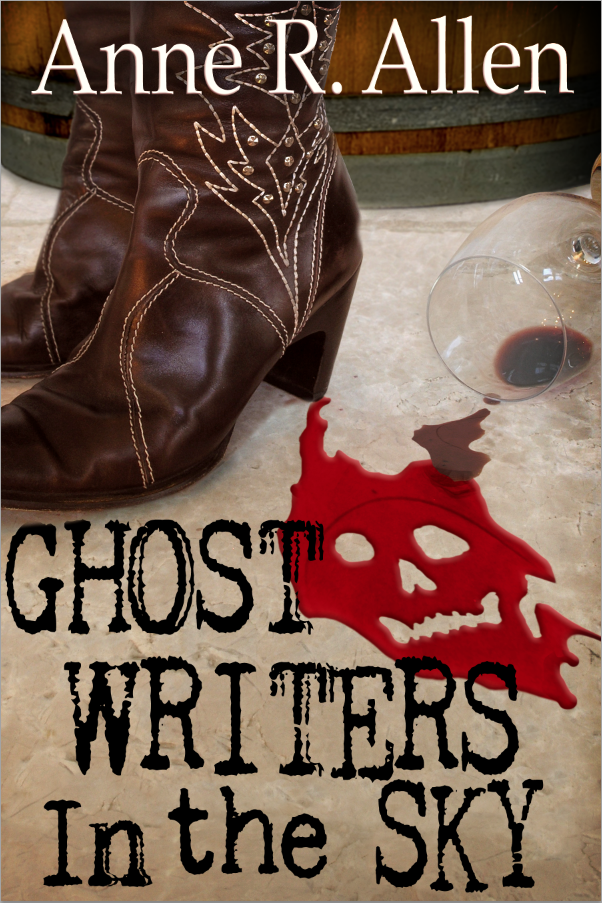
It’s another rom-com mystery, this time set in the 1980s—a prequel to GHOSTWRITERS IN THE SKY and SHERWOOD, LTD (an ebook now, with the paper version to follow in about a month.)


Buy The Best Revenge for Kindle at Amazon.com
Long before the events of GHOSTWRITERS and SHERWOOD, in 1980s New York, a time of big hair, coke-fueled society parties, and the rise of the greed-is-good 1%, teen heiress Camilla Randall befriends Plantagenet Smith, a penniless young gay playwright. But they quarrel and he disappears in the direction of California.

Soon after, Camilla is assaulted by her mother’s fiancé, smeared in the newspapers by a sexy muckraking journalist, and her family loses all their money in the Savings and Loan scandal. With nothing left but her DeLorean and a suitcase full of designer clothes, Camilla sets off in search of Plantagenet, her only real friend.

But when she arrives in the Golden State, she discovers Plant has developed strange heterosexual tendencies and an inconvenient girlfriend. Camilla is forced to move in with some wild-partying college friends, and when a famously debauched TV star comes on to her and then ends up dead, Camilla is arrested for his murder.

In order to clear her name and find the real killer, she turns to a friendly sanitation worker, a dotty octogenarian neighbor and the hot muckraking newspaperman who ridiculed her—who also happens to be her boss. 

And don't you just love this cover by Katheryn Smith? It's got that 1980s nostalgia feel, but matches the look of the other two Camilla books. Thanks bunches, Kate!

Sunday, December 25, 2011

Procrastination: Myth, reality or your best friend in disguise?

 by Ruth Harris

I’d like to start this December 25 post by extending my heartiest congratulations to those Master Procrastinators who are still putting off their Christmas shopping. You’re the pros and we salute you!

Now to the rest of us:

My mission (and I chose to accept it) was to blog about The Big P so I turned to the global authorities on said subject. Not shrinks. Not self-help gurus. Not cubicle dwellers. Not housewives with a sink full of dishes & dust bunnies under the sofa. But … ta da!…wait for it!…the true, undisputed Rembrandts and Picassos, the acknowledged geniuses of the Art and Craft of Procrastinaion: Writers!

Who are able to luxuriate in every exquisite moment of guilt, self flagellation and despair. Who can wring every last drop from an orgy of self-loathing about not-writing. So, when I requested some info and insight, here is what I got:

            •           Humor, bitter
            •           Snark
            •           Promises to get back to me later (I’m still waiting)
            •           A single instant reply—which on closer examination turned out to be a
                        deviant form of procrastination
            •           Constructive, prescriptive recommendations
            •           Denial
                          

Jill Metcalf (Jill’s webpage) is the multi-published, award winning author of 5 historical romance novels. Jill took the competitive approach:

  “I would have answered this sooner but...I had to build a sand castle. Then I remembered, I don’t live near a beach. Then I remembered I had to make my bed...but it was made, so I un-made it and made it again. Then I remembered I had to do laundry, but I’d already done the laundry and it was dried and folded...so I washed it all again. Then I remembered...LOL.  I’m the Queen of Procrastination.”

As the Queen of Typos, I am honored to share my throne with Procrastination Royalty.

Still, all is not sand castles and laundry. Jill concluded by saying: “I have never failed to meet a deadline or an obligation. If I give my word, I keep it.”

Fact is, HRH, the Queen of Procrastination, has obviously found a way to make procrastination work for her. 

Shelly Thacker, (Shelly’s webpage) a bestselling author of historical and paranormal romances published by Dell and Avon, took a practical, constructive approach: “When it comes to beating procrastination, visuals work best for me. I like calendars, checklists, and charts. I keep a calendar next to my computer with page goals spelled out for each week, and a checklist of chapters completed so far. Watching those numbers go up is very motivating.”

For more tips, Shelly posted an excellent article which you will find here.

Shelly’s article is loaded with helpful—and very effective—ways to beat back The Big P. Her advice is practical, very doable and it works. She’s a pro who knows what she’s talking about.

Lawrence Block, (LB’s Blog) that sneaky devil, answered instantly (really!): Turns out keeping a beady eye on his email and replying quick-as-a-flash is Larry’s creative and (obviously) efficient way to devote himself to You Know What.

In the interest of complete disclosure, I must point out that LB’s method is certainly efficient. He’s been a bestselling writer for over fifty years, the author of the bestselling Matthew Scudder and Bernie Rhodenbarr series plus many, many, many more titles. Larry has written under a number of pseudonyms and was named a Grand Master by the Mystery Writers of America in 1993. His Liar's Bible: A Handbook for Fiction Writers and other books of writing advice are considered classics.

Consuelo Saah Baehr: (The Repurposed Writer) Years ago, Consuelo and I shared the famous/infamous editor, Michael Korda, when we were being publishing by Simon & Schuster. Consuelo’s been TradPubbed but now has gone digital. She’s the bestselling author of Nothing To Lose  and here’s what she has to say: 

“I was a procrastination junkie and, like all career junkies, I hid my addiction by doing hard things that looked good on paper but were not my real life's work.  Hey, I have a glamorous job, leave me alone.  

“Still, many mornings, I would get some whispers from the soul hole:   You haven't written anything new in years.  I bought a procrastination tape and wrote out my list. Write another book, lose twenty pounds, re-align my sinuses and my septum.

"’You are a doer,’" screamed the man on the tape. I listened to him every day.  Nothing.

 I tried magical thinking.  Nothing. Until about a year ago life shoved me in the path of the moving train called KDP.  

“My brain said "No."  Please.  Too hard. Two people told me it wasn't hard.  It was easy—Joe Konrath and Zoe Winters.  I thought, well, I can just put one foot in front of the other so I tried it.  I tried it early in the morning when I still had clear faculties and got lost in the work. 

 “I realized that the best antidote to procrastination is momentum. If you can take a few tiny steps and keep going, momentum will pull you along.”

Liliana Hart, multi-award-winning author of romantic suspense and mystery fiction,  (lilianahart.com) nailed it. Quoth Liliana: “Procrastination is commenting on your procrastination blog when I have 30k words left to write on a book that's due at the end of the month.”

Liliana was polite enough not to tell me to bug off with my stupid questions. And I wasn’t clueless enough to pester her again, either. I know a busy woman when I hear from one! And I also know Liliana will meet her deadline!

Now we come to the deniers. Or maybe they’re the realists. But there are writers who simply don’t believe in procrastination and/or being blocked (IME, very often the same thing).

Robert B. Parker, (http://www.robertbparker.net/author) of the Spencer and Jesse Stone series, didn’t believe in The Big P. He thought writers should think of themselves as plumbers.

You’ve heard of plumbers who don’t show up when they’re supposed to but have you ever heard of a plumber who couldn’t fix a faucet because he was in procrastination mode?  No way. He could say his kid was sick, he could say his car broke down, he could even say he had a terrible hangover and couldn’t fix your faucet.

But if you called him and the message on his voice mail informed you he was alphabetizing his complete collection of Super Bowl tapes and couldn’t fix your faucet, he’d be booted out of the plumbers union. Basically, Parker’s advice was: “Shut up, sit down, and write.”

D.D. Scott, bestselling romantic comedy and humorous mystery author  (ddscottville.blogspot.com) and Reigning Goddess of WG2E sees it the way Parker saw it.

D.D. was succinct. And pithy, too.

 She said, and I quote: “There's no such thing as procrastination...just get your butt in your chair & get your BITCHOK Groove in full gear!!!”

“BITCHOK?” I asked D.D. “Wot’s dat?” 

She explained: Butt In The Chair, Hands On Keyboard.

I replied: lmao. Although on second thought, I probably should have said lmbo.

D.D. and Parker are pros and they have the impressive body of work to prove it. 

Yeah, Ruth, I hear you say, but what about you?

I’m strictly a minor-league procrastinator and indulge only infrequently. In my experience whenever I start diddling and futzing around, organizing my spices or rooting through my medicine cabinet to get rid of the expired aspirin and cold meds, it means that I’m stuck. My sub-conscious is sending me a message and the message is always the same: You screwed up. Somewhere. Somehow.

Whether it’s a problem with plot, voice or characterization, procrastination is an alert, telling me to figure out where I’ve gone off track. To do that, I go back to the beginning—I mean that literally, we’re talking Page One here—and read very, very attentively and carefully until I can figure out what the problem is—whether one of omission or commission.

So, if you’re like me, you will consider procrastination your friend. The ally who is sending you an important message and doing its best to help you write and finish your book.

To make one final comment about the myth/reality/agony of procrastination, here’s an anonymous observation—sometimes attributed to Monty Python:

“Procrastination is like masturbation.  At first it feels good, but in the end you're only screwing yourself.”

So have a Merry Christmas and a very Happy New Year and, whatever else you do, stop diddling around & finish the damn book!

So, scriveners, what are your favorite procrastination techniques?


This just in from MWiDP! Anne's Hollywood mystery, THE GATSBY GAME is a Christmas freebie on Amazon for the next three days. It hit #40 in Free Contemporary Fiction yesterday. And GHOSTWRITERS IN THE SKY  is only 99 cents for a limited time.

Sunday, December 18, 2011

Why One Author Chose Traditional Publishing--And How to Decide if it's Right for You

Roni Loren's blog Fiction Groupie has been one of my favorites since I first began reading blogs. I was so happy for her when she signed with her agent, Sara Megibow (who is with one of the classiest, most pro-author agencies around, the Kristin Nelson Agency.) Then I was even happier when she got her book deal. 


As most of you know, I turned down an offer of representation last fall and decided to go the small publisher route so I could keep more control. It's working very well for me and I'm about to launch book #5, THE BEST REVENGE--the prequel to my comic Camilla Randall mysteries.


Ruth Harris has happily gone from the Big 6 (as an editor as well as author) to self-publishing, and we've talked a lot about the indie Kindle revolution. We had a popular post from Rick Daley in October, "When Landing an Agent Lands You Nowhere" telling what it's like to be represented by an agent who can't sell your work.


But lest Ruth and I seem to give too much weight to the "Self-Aggrandizing Self-publishing Monarch-persons," I decided it was time to hear from an author who is comfortable with the traditional publishing process. There's a lot of snarky "us vs. them" talk that goes on in the blogosphere, so I wanted to offer a positive view of traditional "legacy" publishing for those of you who are still holding onto that dream. If you read Publisher's Lunch, you'll see that deals are still being made for debut authors every week, and New York publishing is still alive and well. Not everybody is cut out to be a "wrublisher" or deal with the seat-of-your-pants world of small presses. So here's Roni with a great "can't we all get along" message for the Holidays. She is so right: don't let anybody criticize your dream!

Why I Went Traditional and 
7 Reasons Why You Should (or Shouldn't)
by Roni Loren

First, I want to thank Anne for having me over here at her fantabulous blog. I always learn something new when I stop by, and I love her philosophy of slow-blogging (even though I have yet to take it up myself, lol.) And Anne and I are both traveling on similar journeys with our books coming out, yet we've gone about it different ways. So Anne asked me to talk a little about the journey to debut authorhood from the perspective of someone who chose the traditional route.

There is some polarizing going on in the writing world lately. People in general like to take sides on issues and writers are no exception. Plotter or Pantser? Fast Drafting or Edit-As-You-Go? Literary or Genre Fiction? Man, we love to debate.

And most recently the topic on the docket is Indie vs. Traditional publishing. Both "sides" are guilty of hocking loogies at the other. Traditional pub people complain about the lack of quality in self-pubbed stuff, they fuss about Amazon, they lament about ebooks and missing the smell of paper. (Dude, WHY is everyone smelling their books?)

Then indie pubbed people talk about how traditional authors are letting themselves get totally screwed, they refer to Big Publishing like they're evil overlords, and they talk about how so many horrible books get published traditionally every day. "Look a typo! In a Big 6 book! Gah, the crap that makes it out! Editors aren't editing anymore!"

I'm not going to go into the whole debate because that's already been done well by Bob Mayer--read his post Writers For Traditional Publishers=Slave? Indie authors=f**kwad. Come on!.

But here's the thing I want everyone to hear: WE ARE ON THE SAME TEAM

Writers are writers. Day to day we do the same things. And unless you're one of the BIG TIME multi-million dollar deal writers, we're ALL underdogs. We all have an uphill battle trying to sell books in a crap economy to a public who is reading less and less every year and who would rather a new app than a new book.

And you know what? How we do that is just a detail. Yes, if you go indie, you're going to have different challenges than if you go traditional. But the reverse is also true. Each path has it's own pros and cons. And the beauty of this whole thing is...

Your dream doesn't have to be the same as my dream.

So stop wasting time with these debates on who's right, who's better. Worry about what is best for YOU and your career. What path is going to fit your needs best?


Not sure what path is better for you? 
~Some key things to consider~

1. Validation - How deep is your need for validation from professionals?
This was a component for me. Part of my dream was to hear from an agent and a respected editor that my writing was good enough and that they believed it was worth paying money for. I found it enormously validating to know that Nelson Lit got 36,000 queries in 2010 and only signed 9 clients and I was one of them. Maybe that says something negative about my self-esteem, but that was part of my dream. Indie publishing would not have given me that. 
However, if you don't need that kind of validation. If you only need to hear from readers who love your work, than that part of traditional publishing doesn't offer you any additional benefit, so maybe indie is the way to go.
2. Deadlines - Do you find them motivating or restrictive?
Working on a deadline can be stressful. And working on someone else's time table is WAY different than your own self-imposed deadlines (like Nano or something). Self-imposed deadlines don't have true consequences beyond a little disappointment or guilt. But deadlines with traditional publishers are part of a legal contract. They are a big deal. 
I do get stressed knowing I have a deadline, but I also find it very motivating. It's taught me to reaarange priorities and not to slack. But if your creativity shuts down under a deadline, then this is a con of traditional publishing. If you indie pub, you set your own schedule.
3. Marketing - Can you balance this with writing?
Let's face it, even in traditional publishing, a lot of your marketing is up to you. I am fully responsible for building my online platform, for blogging, tweeting, getting the word out, blog tours, etc. But there's no denying that I get in some doors that would be much tougher if I were indie pubbed. My book automatically gets reviewed in RT Book Reviews magazine because they review all Berkley Heat books. I was in the Breaking In feature in Writer's Digest magazine this month because I have an agent who helped me with that. I get into the bookstores. I have a publicist through Penguin. My book was selected for Rhapsody's Book Club. I have someone working to sell my foreign rights. All of those things are possible for indie authors but there would have to be a lot more hustle and work for an indie author to get those things.
So I see this as a big pro for traditional publishing. I want to have time to write. I'm not an overly aggressive person, so trying to get my foot in the door for promotion doesn't jive with my personality.
4. Genre - Do you know where you would be shelved in the bookstore? 
I write erotic romance. It's a clearly defined subgenre that sells well. I know exactly where I would be shelved. And that's what a publisher wants. They want to know when they read your book exactly how they would market it and to which kind of readers they would sell it to. When I queried Sara, I said in my query "This story would appeal to readers of Shayla Black, Lauren Dane, and Maya Banks." (Note: I didn't say mine was just like theirs or better than or any such nonsense. I just told her who my market would be. Incidentally, I sold to Berkley Heat who publishes all three of those ladies and I now share an editor with Shayla.) 
So if your book crosses a few genres or doesn't seem to fit in a specific spot in the bookstore (or is in a genre that has been declared "dead"), then indie might be the better option because you have a lot more leeway. You can be more experimental. I think this is one of the most exciting things about indie publishing. My own genre started in the small digital publishers before it went mainstream. I love the idea of having new genre options to read like romantic horror or m/m romance (which is now becoming mainstream because of experimental digital publishers.) 
5. Flexibility - Do you want to write in one genre or many?
In traditional publishing, at least when you're getting started, it behooves you to stick to one genre. You're trying to build a readership and your publisher wants to do the same. So, they don't want to sign you for a three book deal where one is horror, one a western, and one sci-fi. They want you to do one thing really well. Then, once you build up a fan base, you can get the flexibility to branch out. (Just ask those authors I mentioned above. They all do much more than erotic romance now.)  
But writers often have ideas that genre hop. I know I do. I don't only get erotic romance ideas--I'm not a hussy ALL the time. ;)  But I'm happy putting my energy into this right now because I love my series and want to build momentum. However, if that feels overly restrictive to you--indie affords you options. You can publish what you want. You can see which genres sell best for you.
6. Speed - How prolific are you?
Indie publishing favors the fast writer. The more backlist you have, the better chance you have for making a good living. If you can bust out a quality novella in a month, then the thought of waiting 12-18 months (the normal publishing turnaround time for publication) may seem interminable.  
I am a slow-ish writer--though I'm steadily improving. My deadlines are set up to have me finish a 90-100k book in 4-6 months. And that's a fast schedule because my books are going to be released every six months instead of once a year. If I was indie publishing, I wouldn't be getting anymore than two books out a year anyway, so the traditional publishing schedule doesn't hinder me any.
7. Control - Are you a control freak?
In traditional publishing, you still have a lot of control--at least in my experience. They haven't made me change anything I didn't want to. I had input on the covers before their development and after. (In fact, they scrapped my second book's cover when I pointed out an issue and gave me a completely different one.) I had full permission to rewrite the back cover blurbs. I wrote my tag lines on the front. They didn't like my original title but I'm the one who came up with the new one. However, they didn't HAVE to give me all that control. And I'm sure with some publishers, they're a lot more restrictive. And there are definitely things I have absolutely no say in like pricing, print runs, etc. 
So if you know you will have trouble not being in control of some of those things, indie may be the better route. However, remember with all that control comes LOTS of responsibility. My work on my cover involves sending an idea of what I want and photos of my character inspirations. That's it. Then the professionals take over and I don't see it again until they send it to me for final approval. So I've spent maybe 20 minutes working on my cover. If you indie pub, that is going to be a much more extensive process.
So based on all those things, I chose to pursue traditional publishing. And I'm happy with that decision. But you may come out with a different conclusion when you ask yourself those questions.

Figure out what path suits you best and strive for your dream. Don't criticize anyone else's. And remember that dreams can shift. You may find yourself on the other side of the coin one day. In fact, I think the hybrid author who publishes both traditionally and indie is going to be the one best poised for success. So don't go poo-pooing the other side. You may be one of them one day. ;)

So what do you think? What does your dream look like? Are you as tired as I am of people making this a "taking sides" thing? What made you decide on your own path? Which of the issues above are big sticking points for you?


Roni wrote her first romance novel at age fifteen when she discovered writing about boys was way easier than actually talking to them. Since then, her flirting skills haven’t improved, but she likes to think her storytelling ability has. Her debut erotic romance CRASH INTO YOU will be released January 3, 2012 by Berkley Heat/Penguin. If you want to read more posts like this one or follow her journey to debut authorhood, you can visit her writing blog Fiction Groupie or her author blog. She also tweets way too much for her own good.


For this week's Indie Chicks' story--from Katherine Owen--click here. 


Next week, in preparation for your New Year's resolutions, Ruth Harris will blog about PROCRASTINATION. Yeah. That thing you're going to worry about tomorrow.

Sunday, December 11, 2011

HOW NOT TO BLOG: Beginning Blogging for Authors Part II

This is a continuation of last week’s post “HOW TO BLOG.” It's aimed at authors who are trying to build platform. If you’re only blogging for yourself and your cat, skip this—you and Pufferball can go watch that Hallie Berry DVD again. I’ll also repeat what I said last week: This is not meant to be taken as dogma. (Seriously. I hate to step in a pile of dogma myownself.) This is just what works/doesn’t work for me and successful bloggers I admire. But there are exceptions to every rule, and creative people are all about being exceptional. If something different works for you, go for it! 

HOW NOT TO BLOG: 22 Things for New Bloggers to Avoid


1. Ignoring comments. If somebody comments, respond in the thread. Personally, I did not know this for, like, months when I started out. If any of you who commented two years ago are still reading in spite of my cluelessness—I apologize. Email responses are good, too—but responses in the thread stimulate discussion and further comments. And if you want comments, turn off the %&@! CAPTCHA, word verification, people! Your spamblocker blocks 95% of spam without it. The other 5% you can delete yourself. 

2. Crying in the wilderness. Social Networking is SOCIAL. Nobody coming to your party? Go find one. Visit other blogs. To have a friend, you gotta be one. Follow and comment. It’s called social networking. Go out and be sociable!

Tip: Looking for stuff to post about? Respond to other people’s blogs on your own. Instead of leaving a long comment in that anti-prologue thread, write your own post on the pros of prologues and leave a link.

3. Using your blog as a personal journal. “Today I went to the dentist, picked up groceries and cooked my husband’s favorite meatloaf,” will snoozify even your immediate family. It’s OK to post personal stuff if it’s funny or newsworthy—like how Pufferball won the “ugliest pet” award. Or how many Kardashian-wannabes you spotted yesterday at the mall. But don’t use it like a private diary if you’re blogging to build platform. 

4. Whining: Resist posting rants about the unfairness of the publishing industry. Or how lame that famous writer’s work is compared to yours. It’s OK when you’ve had a big disappointment to ask for the emotional support of your friends, but don’t give specifics and never rail against the agent/editor/reviewer who spurned you. Remember the first thing an agent will do if she’s interested in your query is Google you. She probably just had lunch with that editor you called Mr. Poopy-Brain.

5. White text on dark backgrounds. Ouch! My eyeballs. Seriously. Every “how to blog” article says this, but still, half the blogs I visit have dark backgrounds. They are a big “go away” sign.

6. Posting unpublished fiction or poetry if you ever hope to publish it. And don’t post creative stuff if you’re just trolling for praise. Want a critique? Try critiquecircle.com, or writing community forums like Nathan Bransford’s. For some reason, people don’t tend to read fiction on blogs (even by famous published authors.) Save the fiction for the occasional blogfest or contest, but otherwise, keep your WIP to yourself, especially if you’re a newbie. You don’t want that sucky first draft hanging out there in cyberspace. Trust me on this.

Besides, you’ll be seriously limiting your future publishing options. Listen to agent Meredith Barnes: 

“Many writers serialize their work on their blogs. I cannot encourage you strongly enough to avoid that. Authors nearly always list "getting an agent" as the reason they put "teasers" on their blogs. But there is already a mechanism for showing your work to agents: the query. If you choose to do so anyway you may put yourself breach of the warranties and indemnities clause of the publishing contract that you haven't even signed yet.”

Exception: blogfests and contests. A blogfest is a non-competitive mass sharing of work. One blogger will announce a topic, say “first-kiss scenes,” and anybody who wants to join in signs up. On the given day, everybody reads each other’s posts and makes comments. It’s a fun way to meet new writers and get acquainted with their work. A blog contest can be anything from a random name draw from a list of commenters to a competition for the best cat-related haiku. Prizes are usually a book or maybe a critique from the blogger. Rewards for the host blogger are an increase in traffic and more followers.

7. Writing snoozifying headers. “It’s Wednesday” or “So Sorry I Haven’t Been Blogging” won’t snag a lot of readers. If you want examples of good headers, browse Twitter and see what YOU would want to click on. You need to think like a copywriter—as Joanne Tombrakos blogged on Jane Friedman’s blog this week. Certain types of headers typically draw in readers.

·       Lists: 10 Lies That Work Better than "My Dog Ate My Homework"

·       Questions: What if the Dog Really DID Eat Your Homework?

·       Answers to Questions: A how-to is usually a grabber: “How to Sell Homework-Excuses on E-Bay”

·       Search Engine Optimized: Use keywords potential readers might use in a search to bring new readers. Nathan Bransford explained SEO way better than I can in his post What You Need to Know About SEO on his blog this week.
  
8. Pointless tags or none. Tags are the little words and phrases at the bottom or top of a post that tell search engines what’s in the text. Use as many tags as possible. This is how Google finds you. Tag your posts with names of anybody mentioned, plus your main topics. (More SEO.)

9. Failure to link. Don’t be afraid you’ll send your readers off to read somebody else if you include linkage to other sites. Linking is friendly and it also gets the attention of those search engines. A weekly round-up with links to some of your favorite blogposts of the week is a great way to get readers and notice from the Google spiders.

10. Blogging too often. If you have nothing to say, don’t say it. Yes, I know blog gurus tell you to post once a day or more, but creative writers have other priorities. (You’ve got that novel to write, remember?) I suggest once a week, with an occasional mid-week post for important announcements. Most blogs burn out after two years. But you want yours to be a platform to support you for the long haul.

Personally, I’m relieved when my favorite bloggers cut back to a few posts a week. That way I have some hope of keeping up.

11. Blogging erratically. Keep to a posted schedule. Most agents say they’ll look up your blog before they request a partial. If you have an abandoned blog hanging in cyberspace, this says—1) you don’t stick with things 2) You don’t have much to say 3) You don’t have the platform needed to sell your work to an editor.

And if you’re a self-pubber who doesn’t update your blog, you’re abandoning your fans. They don’t tend to like that.

It’s fine to take blogcations, but if you have to skip a few posts, leave a message letting readers know you’ve got big things in the works and when you plan to return. And—if you do lapse for a while, don’t post a long list of excuses when you get back. Bo-ring.

If you started a blog six months ago and haven’t done anything with it—delete it now and start over when you’re ready. Really. Right now. Especially if you’ve got queries out or a book for sale.

FYI: Wednesday and Thursday are the biggest blog traffic days. (Worst days: Saturday and Sunday—which I didn’t know when I started a Sunday blog. Sigh.)

12. Monetizing. If you sign up for Google ads, you have no control over what they advertise, and many of the ads will be for bogus agencies or scam vanity publishers. Besides, they won’t pay you more than a few pennies a day and they’ll make your blog annoying. You’re after bigger fish. Like followers, readers and maybe a book contract.

13. Acting like you’re a rock star from Mars. Don’t pretend you have fans when you’ve never published a book. Talk to your readers as equals, not adoring minions. Don’t assume all your readers are newbies who don’t know the basics. Or they are fans come to worship at the feet of your greatness. And it's kind of creepy to make oblique references to your characters as if the reader has been living in your head.

If somebody disagrees with you in a comment, argue respectfully, or delete their comment if it’s offensive, but don’t say— “When you’ve written a whole novel like I have, you ignorant pipsqueak, you’ll know I’m right.” You may be talking to a bestselling novelist—or an agent’s assistant who’s about to read your query.

14. Trying to maintain too many blogs. One is plenty. Two if the other is a group blog. Anything more and you won’t be able to keep them up. If somebody visits your profile and randomly clicks on one of your twelve blogs and it hasn’t been updated since you posted that weepy eulogy for Heath Ledger, they are not going to try another—and you just stamped “unprofessional” next to your name.

15. No contact info. A blog is essentially an advertisement for you as a writer. Why advertise a product that’s not available? Unless you’re being actively pursued by a dangerous cyberstalker, or you're living under a repressive regime and posting stuff that could get you arrested, there's no reason not to provide a contact email address. That's the whole reason you've got the blog--so people can find you. I advise setting up a separate email account for your blog.

16. Making the blog about one book and/or posting cute observations from your character’s point of view. Yes, I know some bloggers have managed to sustain this kind of tour de force for a while—but what happens when your editor has you change the character’s name? Or that series doesn’t sell and you move on to something else? You want a blog to establish your career—not lock you in a box.

17. Focusing on follower numbers. Go for quality not quantity. This is about making friends who (hopefully) will become loyal fans. If you treat people as a commodity, they’re not going to care about you, either.

19. Spamming other bloggers. Visiting random blogs and saying, “This is a swell blog; come visit mine” is creepy. If there’s a discussion going on about prologues and you’ve just blogged about it, by all means mention it. But it has to be relevant to the discussion.

20. Writing posts that are too long, dense, or address more than one topic. I’ve read that 79% of web users scan rather than read. Break up posts with lists, bolding and lots of white space. If you want to write about several topics, use separate blogposts.

21. Letting blogging take over your life. You CAN’T read all the top publishing blogs and comment on all your friends’ blogs every day. Choose one or two days a week and let go of the guilt.

22. Forgetting the #1 rule of blogging is the Golden one.  Offer the kind of content you like to read. Keep it short, sweet, informative and reader-friendly, and pretty soon you’ll have a bunch of friendly readers. Want followers? Follow. Want commenters? Comment. This is social media, get it?

For more on the importance of blogging for authors, checkout Roberta Trahan’s blog this week. She says:

“An author blog is the single most effective forum for building a bridge between you and your audience. You have a soap box, and your readers have a way to interact with you.”
********

What about you, scriveners? What have I left out? Do you have any pet peeves that make you avoid certain blogs? What's most likely to send you clicking off into cyberspace?


Next week’s post will be a refreshing one to those of you who are on the fence about traditional vs. indie publishing. I’ve asked romance writer Roni Loren, who has a novel about to debut with Berkley Heat/Penguin to talk about her experience as a traditionally published author and weigh the pros and cons. She agrees with me that the us-vs-them mentality with trad. vs indie publishing is silly. We’re all in this together!